
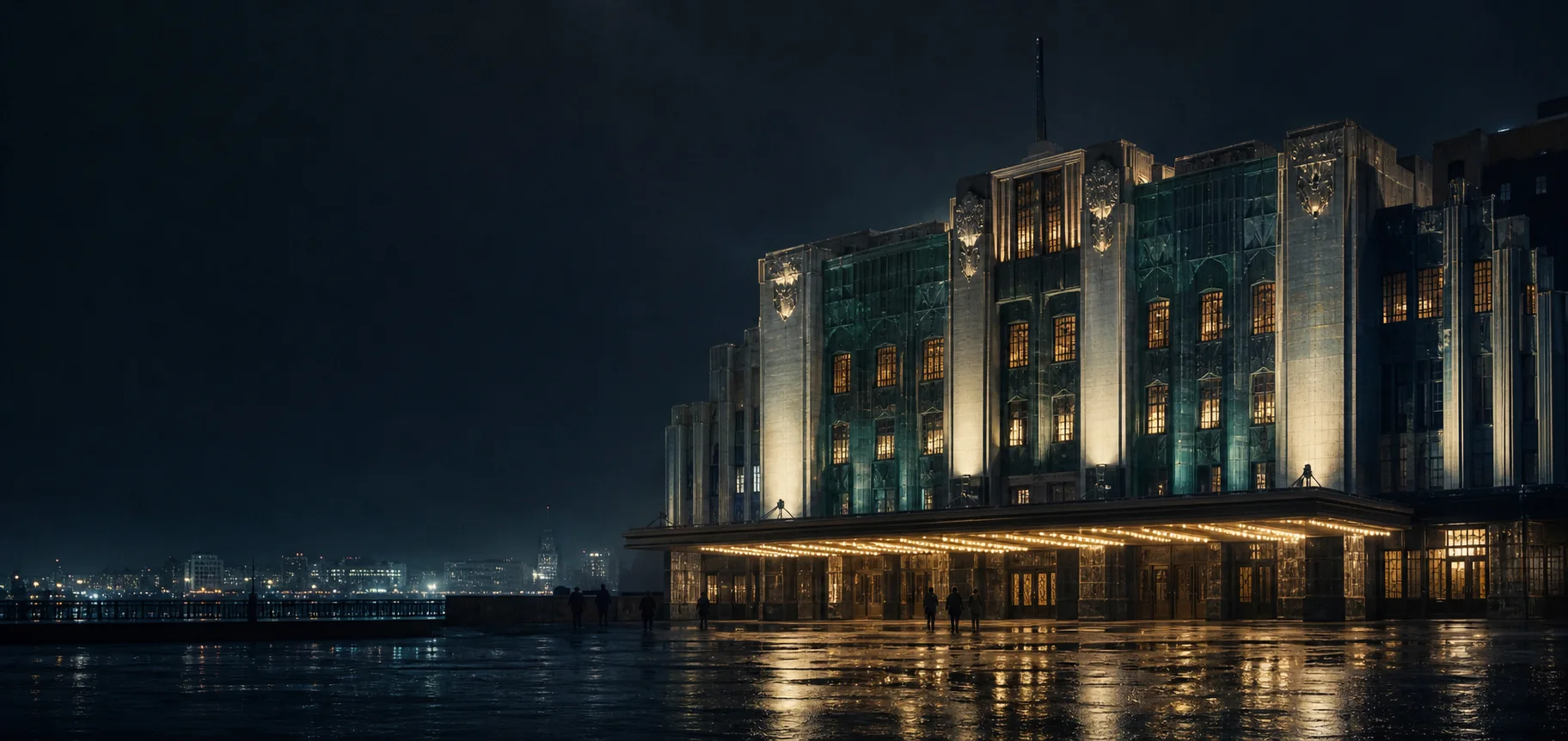
The costliest casino resorts are often ranked as though they were luxury objects: a price, an opening date and an arresting photograph. That frame is too small. These projects combine hotel inventory, performance venues, convention halls, retail streets, food production, utilities, transport interfaces and a highly controlled gaming component. Their meaningful comparison is with urban districts.
1989: The Mirage changes the financing story
The Mirage opened in Las Vegas in November 1989 after a reported investment of roughly US$630 million, an exceptional figure for its time. Its importance was not that no earlier property had offered spectacle. It assembled scale, luxury, entertainment and a free street-facing attraction into a model capable of supporting a new financing thesis.
The subsequent 1990s building cycle made “megaresort” a category. Capital no longer bought only more rooms or tables; it bought a destination engineered to hold attention across many forms of spending. The casino floor remained important, but its surrounding ecosystem became larger and more deliberate.
Cotai: making land into a platform
In Macao, the Cotai area linked former islands through reclamation and created space for a new resort corridor. The Venetian Macao opened in 2007 as a convention-led integrated resort at a scale that repositioned the market. The project linked gaming to vast hotel, retail and meeting infrastructure, making the building a platform for multi-day tourism rather than a single room.
Cotai also shows why project cost is inseparable from public policy. Concession structure, land availability, transport and border access shape the commercial object. A spectacular interior cannot explain the system that made it reachable.
Singapore: the integrated resort as policy instrument
Singapore’s decision to license two integrated resorts came with a formal request-for-proposal process and an explicit tourism strategy. Marina Bay Sands and Resorts World Sentosa were assessed as packages of investment, architecture, attractions and economic contribution. Government agencies continue to describe them as integrated developments spanning accommodation, conventions, retail, dining and entertainment.
Marina Bay Sands opened in 2010 and became part of a wider transformation of Marina Bay that also included bridges, promenade and public-space investment. The three towers and rooftop form became an icon, but the policy story is distributed across agencies, infrastructure and social safeguards.
The building may be private. The transport demand, skyline, labour market and social policy are shared.
What does a project cost?
A headline number may include land, design, construction, pre-opening expense, capitalised interest and initial working capital—or only some of them. Currency and date matter. Delays change financing costs; phased openings move costs between periods; later expansions are sometimes attached retrospectively to the original figure.
Use the developer’s filing or public tender where possible. State the currency and reporting date. Separate original development from later expansion. Do not treat announced budget, final expenditure and enterprise value as synonyms.
Five systems inside the resort
- Movement: arrivals, coaches, service vehicles, staff entrances and pedestrian circulation must coexist.
- Time: hotel, theatre, convention and gaming peaks follow different rhythms.
- Utilities: kitchens, pools, lighting, air conditioning and digital systems create city-scale loads.
- Control: public hospitality sits beside restricted cash, surveillance and data environments.
- Labour: thousands of specialised roles depend on transport, training and roster design.
The architectural achievement is not only visible form. It is the coordination of these systems without making visitors feel that they are moving through infrastructure.
How should a megaproject be judged?
Opening-night spectacle is a poor scorecard. The more durable questions concern maintenance, adaptation, public integration and what happens to workers and place when the concept ages. A project that photographs well but cannot evolve may be less successful than a quieter property repeatedly renewed.
Cost is still significant: it marks the scale of confidence, exposure and material committed. But price alone cannot tell whether an integrated resort improved a city, diversified a visitor economy or merely concentrated risk. The billion-dollar room is a headline. The city around it is the story.
Selected sources
Singapore Tourism Board: integrated resorts overview
Singapore Urban Redevelopment Authority: Marina Bay development
Las Vegas Sands corporate history: Cotai development chronology