
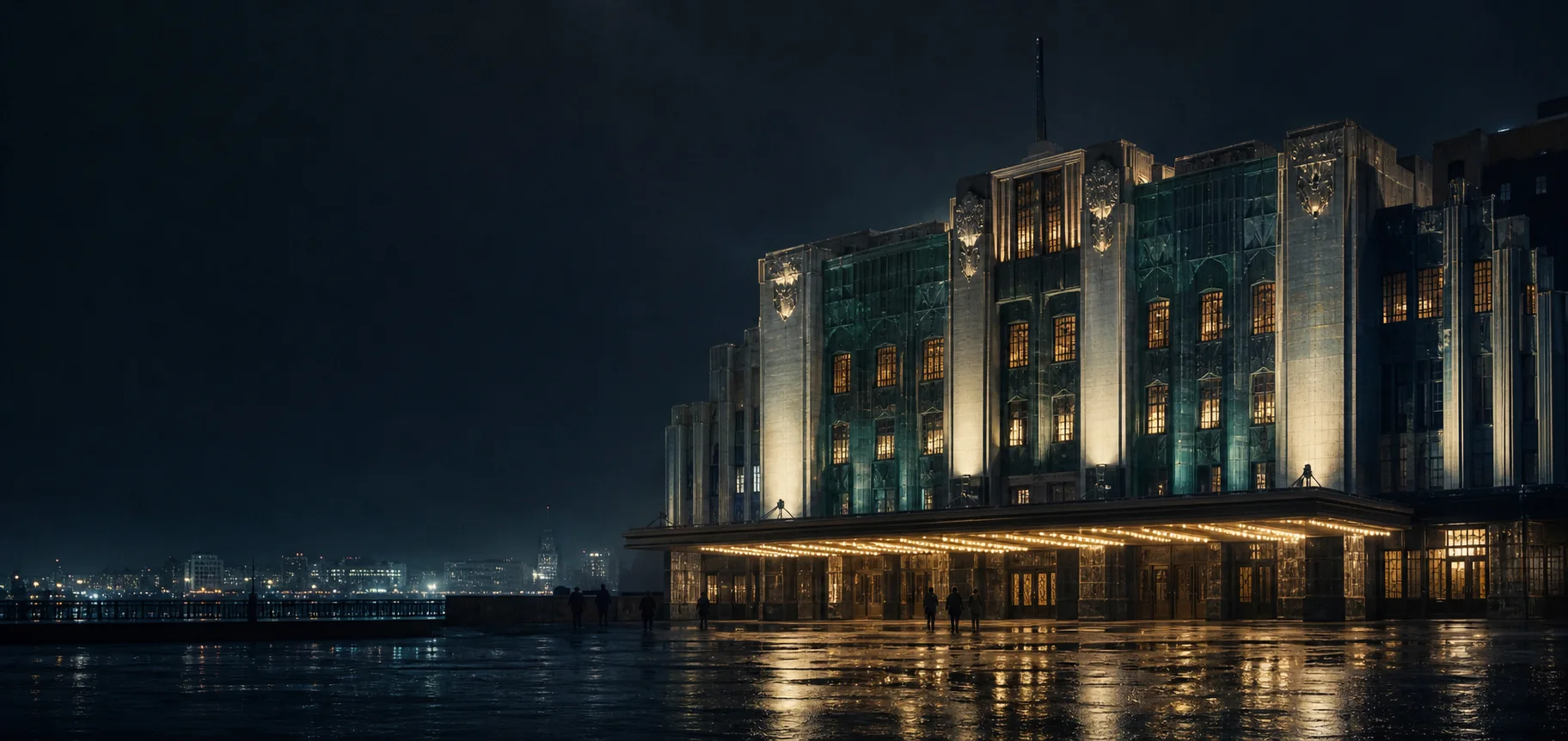
At 1 p.m. on 2 April 2024, the doors of the Tropicana Las Vegas were chained shut after 67 years. Three months later, The Mirage ended a 34-year run. In the language of a city built on reinvention, both events were presented as transitions. For thousands of workers and decades of material culture, they were also endings.
A casino closure is often photographed as an empty floor. That image misses the real work: settling accounts, securing records, surrendering or transferring licences, moving thousands of objects, supporting employees and deciding which fragments of a place deserve public memory.
An institution ends in layers
The public closing time is only one deadline. Reservations must stop; ticket and voucher liabilities need a process; vendors require notice; restricted equipment and records remain subject to control. Regulators may publish closure and changeover procedures because the licence obligations do not disappear when the final guest leaves.
Then comes the building. Hazard surveys, utility disconnection, salvage, demolition and redevelopment operate on their own schedules. A property can be culturally gone, legally active and physically standing at the same time.
Tropicana: the key that could not keep a promise
The Tropicana opened in 1957 and became associated with mid-century luxury, entertainment and the organised-crime history of the Strip. Its long-running Folies Bergère revue and Miami-modern architecture made it more than a gaming address. By 2024, its site had acquired a different value: the planned home of a Major League Baseball stadium.
The closure triggered an archival response. UNLV Special Collections received records spanning 1956 to 2024, including menus, plans and performance material. Objects moved to museums and collectors. Preservation did not save the building, but it prevented the property from being reduced to the footage of its October 2024 implosion.
The Mirage: closing the beginning of the megaresort era
When The Mirage opened in 1989, its scale, tropical theming and free sidewalk volcano helped reset expectations for the Las Vegas resort. Its closure on 17 July 2024 therefore carried unusual symbolism: the building credited with beginning one development era was making way for another identity.
Hard Rock International had acquired operations and planned a major transformation of the site. The closure affected more than 3,000 employees. Public coverage rightly placed severance and recall provisions alongside architectural spectacle; a landmark is also a workplace.
Buildings are remembered by their façades. Institutions are remembered by the people who kept them open.
The human timetable
Long-serving employees hold operational knowledge and community history that no asset register captures. A closure can separate teams, disrupt health cover and force decisions before a replacement job exists. Union agreements, statutory consultation, severance and retraining shape whether “redevelopment” feels like continuity or displacement.
Oral histories should begin before the last week. Executives, dealers, cleaners, performers, engineers, kitchen staff and security personnel experienced different buildings within the same walls. Collecting only celebrity memories creates a distorted archive.
The race to preserve context
A chandelier can survive while its meaning disappears. Preservation works best when an object arrives with provenance: where it stood, who designed it, when it changed and how people used it. Architectural drawings, purchasing records, staff newsletters, show photographs and menus restore that context.
Priority material includes corporate records that can legally be released, architectural documentation, signage, uniforms, entertainment ephemera, oral histories and photographs of ordinary back-of-house spaces. Privacy, employment and regulatory retention obligations still apply.
Four possible afterlives
- Erasure: the structure and name disappear, leaving a development parcel.
- Rebrand: the building survives beneath a new operating identity.
- Adaptive reuse: gaming ends while hospitality or another public use continues.
- Archive: selected objects and records enter institutions even when the site is lost.
None is automatically respectful. A preserved sign can become nostalgia stripped of labour and regulation; a faithful façade can hide a fully altered interior. The best historical account keeps all layers together.
A casino’s last hand is a clean narrative device. The real closure is dispersed across pay records, museum boxes, planning hearings and the muscle memory of former staff. That is where the building continues.
Selected sources
Associated Press: Tropicana closes after 67 years
Associated Press: The Mirage closure and workforce impact
Nevada Gaming Control Board: closure and changeover procedures index